Invest in Holland 2025 Highlights: Foreign Investment Powers Innovation and Strong Business Ecosystems
Ecosystems of excellence in the Netherlands: where fruitful connections are made
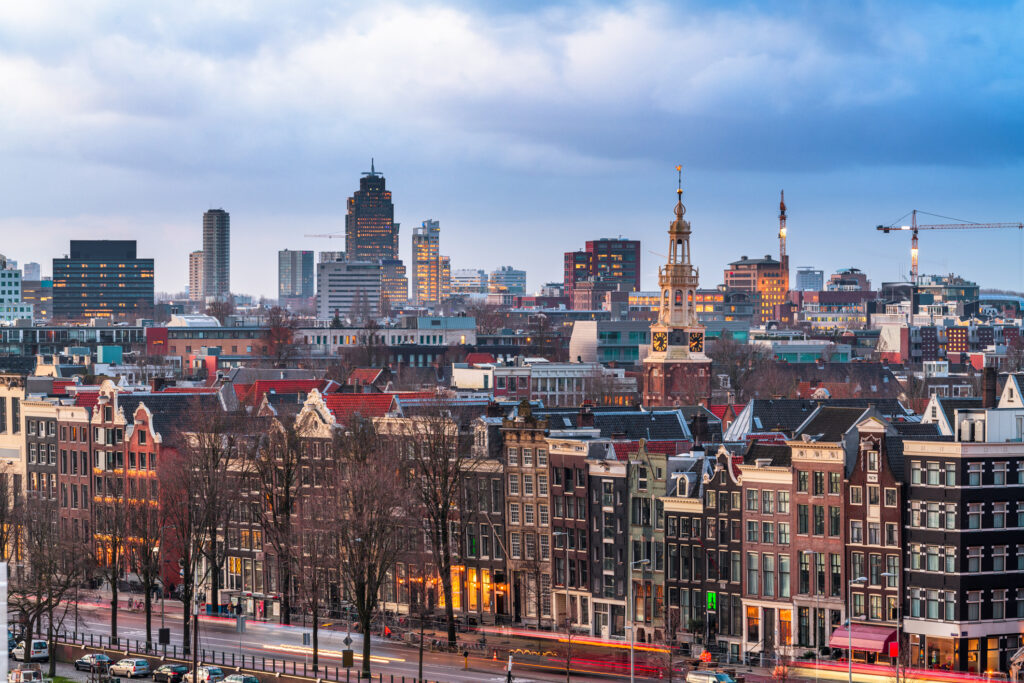
Looking back on 2025, the Netherlands has continued to attract innovative, international businesses, all playing their part in shaping a healthy, prosperous and sustainable future. The caliber of companies that decided to land or expand in the Netherlands, facilitated by the Netherlands Foreign Investment Agency (NFIA) and Invest in Holland partners, underscore the country’s unique position in the heart of Europe and a thriving hub for global talent, technology and innovation. The variety of projects and partnerships of 2025 not only demonstrate the value that foreign companies bring to the Dutch economy, but also the exceptional support and opportunity the Netherlands offers in return.
The Dutch approach to economic development is rooted in its interconnected “ecosystems” – sector-based communities where a ‘triple helix’ of companies, research institutions and government grasp opportunities to collaborate. These ecosystems foster innovation, accelerate growth and nurture talent, making the Netherlands an ideal destination for forward-thinking enterprises looking for a next step.
In 2025, we’ve seen a numerous additions and developments to our ecosystems, further enhancing opportunities for businesses and the Dutch economy.
Life Sciences & Health: advancing global well-being
The Life Sciences & Health (LSH) sector, for example, continues to attract world-leading companies, resulting from its world class physical and digital infrastructure and a robust services sector. They in turn are driving breakthroughs in biotechnology, medtech and advanced therapies, reinforcing the Netherlands’ reputation as Europe’s most connected Life Sciences and Health metropolis.
In 2025, Eli Lilly (US) deepened its presence by announcing plans to build a new state-of-the-art high-tech production facility in Katwijk, part of Leiden BioScience Park, further strengthening the company’s global supply chain.
Kite Pharma (US) continues its advanced cell therapy manufacturing site in the Netherlands, enabling faster delivery of cutting-edge cancer treatments to European patients and enhancing collaboration with local research institutions. Its state-of-the-art facility enables sustainable, large-scale cell therapy production in Europe.
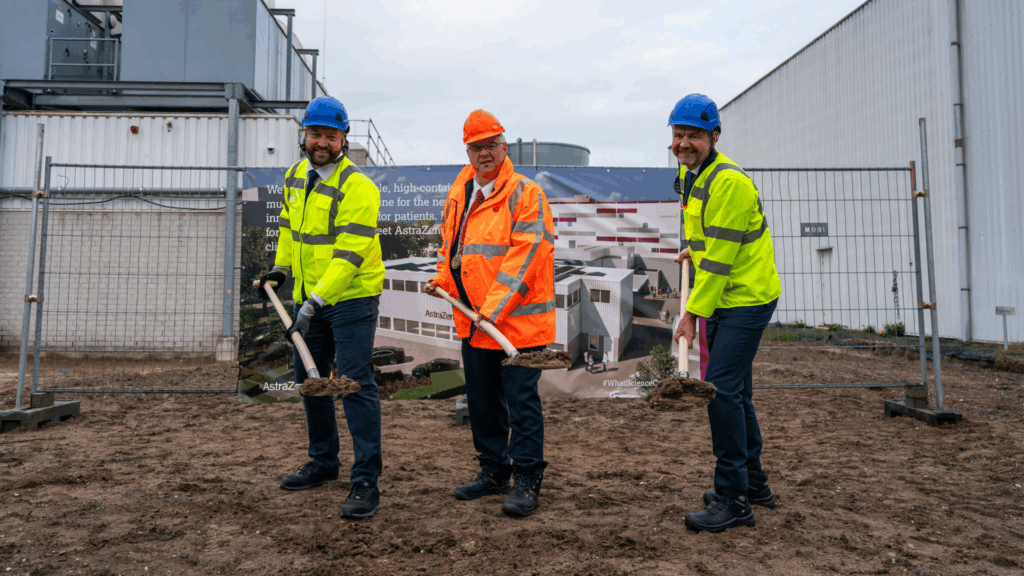
Meanwhile, AstraZeneca Nijmegen (UK) announced plans to expand its sustainable medicine manufacturing facility, increasing capacity for the production, inspection and distribution of biologic medicines, including advanced cancer treatments and vaccines for premature babies. The expansion will add a second fill line to its Nijmegen site, and the number of employees will increase from 100 to approximately 130 at the facility.
Also, Phospho (UK) relocated its headquarters to the Van Nelle Factory in Rotterdam after more than a decade in London. Phospho’s immersive tech enables LSH companies to visualize their innovative findings, and the company was drawn by the country’s thriving life sciences & health ecosystem which is one of the most concentrated and collaborative in Europe.
Agrifood: enhancing food security and sustainability
The Netherlands’ agrifood ecosystem remains a beacon for sustainable food innovation, with exciting additions in 2025 that spur on innovation and job opportunities. Yakult (Japan) and Nourish Ingredients (Australia) chose the Netherlands to enable their European growth, attracted by its advanced supply chains, market access and leadership in food science, with world-class scientists and food innovators on the doorstep.
Yakult established its first global R&D center outside Japan in Wageningen. The state-of-the-art facility is designed to support collaboration and cross-fertilization between science and industry, enabling Yakult to work directly with world-class scientists and companies, including Wageningen University & Research. It is a prime example of the Dutch ‘Triple Helix’ model in action, whereby private sector, government and academia collaborate to develop new solutions together.
Nourish Ingredients’ new European commercial hub in Leiden will accelerate the development and commercialization of Nourish’s precision-fermented fats and flavour solutions, which help create plant-based foods with enhanced taste and texture. The area offers access to pilot fermentation facilities and proximity to key partners.
High Tech Systems & Materials: powering the future
In the drive towards technological advancements, far-ranging expertise and deep industry networks in high-tech systems & materials (HTSM) across the Netherlands offer a clear advantage to companies looking to develop.
The HTSM sector, encompassing semiconductors, robotics and advanced machinery, saw significant, strategic investments from companies like Dai Nippon Printing (DNP) (Japan) bringing their printing capabilities to the Dutch semicon cluster. Another example is Equal1 (Ireland), who cooperate with TNO to develop the next generation quantum devices. Taiwanese Delta Electronics expanded in Hoofddorp, helping their customers transition to smarter, energy-saving systems, and RTX’s Pratt & Whitney (USA) opened its European Technology and Innovation Center (ETIC) in Houten to research advanced propulsion technologies together with TU Delft.
Energy and Chemical Industries: building a greener tomorrow
Sustainability was a consistent theme in 2025, across a number of sectors, including energy and chemical industry. The Dutch energy system is already among the most sophisticated in the world, and its chemical industry hosts 19 of the world’s top 25 chemical companies.
Atawey (France) expanded to the Netherlands with an international office in Eindhoven. It is pioneering clean energy solutions through the development of green hydrogen refueling stations, helping accelerate the transition to zero-emission transport and industry. Novocycle (Türkiye), a pioneer in sustainable lithium-ion battery recycling, launched a pilot facility project in the Netherlands to improve recycling of batteries for electric vehicles. And, Reju (France) announced its first industrial size textile-to-textile recycling center.

Also related to recycling advances, the international Austria based packaging and recycling specialist, ALPLA, announced it is establishing a new recycling company in the Netherlands to pilot a patented solvent‑based process that produces food‑safe HDPE recycled material. Supported by a Dutch government grant, the four‑year project with the National Test Centre Circular Plastics (NTCP) in Heerenveen aims to scale the technology for industrial use by 2030 in line with EU circular‑economy packaging requirements.
Turning to climate tech, Marsland Institute/Coeus AI (Canada), established its new global headquarters in Rotterdam, marking a significant milestone in its international expansion. Specialising in AI-powered forecasting and prediction for renewable energy planning, including wind, solar, hydroelectric, and hydrogen, CoeusAI leverages advanced artificial intelligence to streamline operations, optimize site selection, and accelerate the energy transition. These investments support the Netherlands’ commitment to climate action, building a circular economy and resilient future, further strengthening the country’s position as a leader in sustainable transformation.
Water Technology: future-proofing water management
With rising water scarcity and climate change affecting industries worldwide, innovative water technologies are more vital than ever. The Netherlands is a global leader in water management, and offers a premier ecosystem for companies to develop solutions in water purification, wastewater treatment, smart infrastructure and more. Furthermore, the Dutch have long been respected leaders in integrated water management technologies that improve water supplies, sanitation and climate resilience. This year, the water tech ecosystem welcomed the American Cobalt Water, a leader in smart water management solutions, which established its European headquarters at WaterCampus Leeuwarden. By leveraging advanced digital technologies and artificial intelligence, Cobalt Water Global aims to help cities and utilities across Europe optimise water quality, reduce environmental impact, and address the challenges of climate change. The company’s decision to locate in the Netherlands was driven by the nation’s world-class water expertise, collaborative innovation ecosystem, and strategic access to European markets.
Fintech: digital transformation at scale
Innovation remained central to the development of the fintech industry, and the Netherlands was central to its evolution and progression in 2025. Among others, Aspire (Singapore) and XTransfer (China) joined more than 860 fintech companies in the Dutch fintech ecosystem, or ‘Fintech Capital of Europe’, in 2025.
Both chose the Netherlands for their European expansion, drawn by its world-class digital infrastructure, strong, yet transparent regulatory environment and reputation for encouraging innovation.
Aspire’s move is accelerating the digital transformation of financial services, with the company’s platform simplifying international payments, treasury, expense, and receivable management for businesses operating across borders.
XTransfer, meanwhile, will leverage the Netherlands’ connectivity and robust digital infrastructure to offer secure, efficient cross-border payment services to small and medium-sized enterprises across Europe.
By establishing their European hubs in the Netherlands, both Aspire and XTransfer benefit from and contribute to a skilled workforce and a thriving fintech ecosystem, further solidifying the country’s status as a launchpad for global financial technology leaders.
ICT and cybersecurity: securing the digital age
The Netherlands stands out as one of Europe’s most appealing locations for IT companies thanks to its world‑class digital infrastructure, innovative tech ecosystem, and highly skilled multilingual workforce. As Europe’s most wired country, it ranks No. 2 globally for online connectivity, with 98% of households having broadband access, and it hosts AMS‑IX—one of the world’s leading internet exchanges—giving companies unmatched digital reach and reliability.
Amid the rise of digital services and proliferation of global cybersecurity risks, Fortinet (US) opened its first European distribution center in Almere. The strategic investment marks Fortinet as the first cybersecurity company to establish a supply chain hub in the country, further strengthening the Dutch cybersecurity and technology ecosystem. The move supports local job creation and reinforces the Netherlands’ position as a trusted hub for secure digital infrastructure and innovative supply chain solutions.
Canadian cybersecurity firm C3SA chose The Hague as its European headquarters, bringing a resilience‑first approach to help organizations across Europe confront emerging digital threats. With over two decades of national‑security experience, the company will integrate into the Netherlands’ strong cybersecurity ecosystem. The Netherlands was selected for its international outlook, regulatory alignment opportunities, and access to global markets.
Also, cybersecurity company Turing Space (Taiwan), launched operations in The Hague, focused on accelerating demand for digital trust, self-sovereign identity (SSI), and cross-border verification frameworks, which is crucial for today’s interconnected environment.
How does Invest in Holland help?
Behind every successful investment is the dedicated support of the NFIA and Invest in Holland partners. The Netherlands ensures companies can benefit from the country’s strategic location and world-class infrastructure, innovative environment, commitment to sustainability and diverse workforce. The NFIA and Invest in Holland’s expertise in site selection, regulatory guidance and ecosystem integration ensures that foreign companies can thrive and grow in the Netherlands.
Looking ahead: shared value for a sustainable future
The 2025 highlights show that the Netherlands is more than a place to do business – it is a partner in progress. By fostering vibrant ecosystems, supporting innovation and welcoming global talent, the country continues to support innovation for a sustainable and prosperous future – for both global society and the Netherlands.
16 January 2026